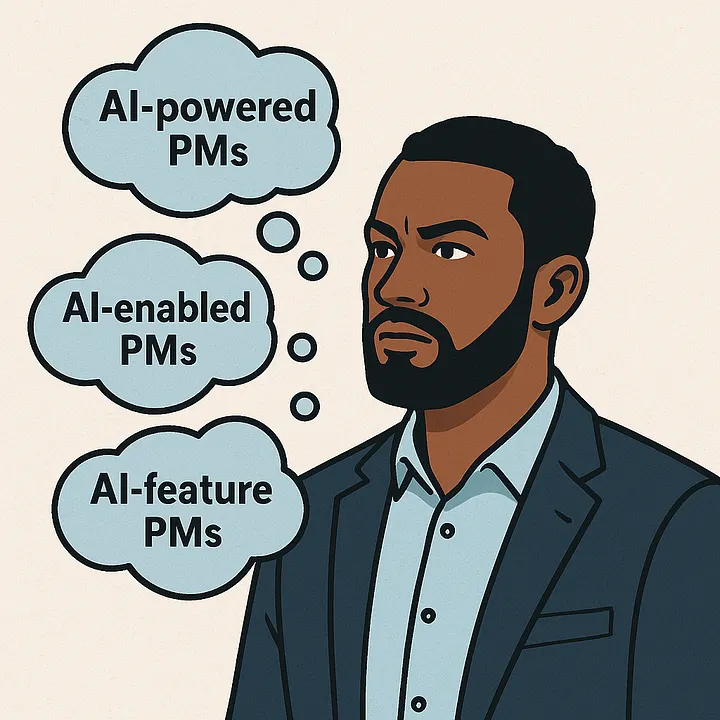
It’s hard to scroll through LinkedIn these days without seeing new “labels” for product managers in the age of AI — AI-powered PMs, AI-enabled PMs, AI-feature PMs, and the list goes on.
And it’s equally hard to resist labeling yourself. I get it — it’s fun to define your niche. But it takes me back to my early days in product, trying to figure out which frameworks to use, which tools to adopt, which prioritization method to swear by. The deeper I went, the clearer it became: the tools will keep changing — from spreadsheets to Figma to AI copilots — but the fundamentals likely won’t. Beneath all of the buzzwords, there’s really only one kind of Product Manager that matters — the one who figures out what customers actually need and builds something that truly serves them.
Great PMs aren’t defined by the software they use or the tech trend they chase. They’re defined by clarity of thought, empathy for users, and the ability to make the right call when it counts.
Back to First Principles
It’s fine to have different “types” of PMs, but those distinctions shouldn’t dilute the essence of the craft — especially now, when our ability to code, test, and deploy is accelerating faster than ever.
noted that as AI boosts developer productivity, the traditional 1:10 PM-to-engineer ratio will likely shrink. That sounds efficient, but it also means product is positioned to become the bottleneck….the design thinking, the judgment, the hard trade-offs still needs to happen before anything valuable gets built.
In my recent talk at Black Is Tech, “The AI-Amplified PM Shift: Scaling Efficiency to Think Bigger and Build Smarter,” I explored this exact tension. AI is expanding both the problem space (what’s solvable) and the solution space (how we solve it). That expansion makes discernment — not speed — even more important. AI will open up our options and change our view of what’s possible, but knowing which problems are worth solving — is now the most valuable skill for PMs.
Sharing that
talk below:
The Tools & The Trade
Don’t get me wrong, we must be insanely curious in order to keep up where AI is advancing on a weekly basis. As mentioned earlier, I’m seeing tool fluency getting mistaken for mastery of the craft. Prompting well isn’t the same as thinking clearly. Using AI to generate specs or summarize research can make you faster, but if you don’t understand the trade you’re in — discovering problems, defining value, shaping solutions — you’re just a well-equipped tourist. The real leverage comes from knowing what to ask of the tools, not how many you can stack into your workflow.
And that’s where judgment becomes your moat. In a world where AI can generate ideas, specs, and designs, great PMs stand out by knowing when to say no — by cutting through noise and focusing on what truly moves the customer or business forward. Tools give you speed, frameworks give you structure, but judgment provides the direction.
In the end, it doesn’t really matter what kind of PM you call yourself. The AI wave will keep nudging us to define new labels, and new identities — but the work itself will always come back to the same foundation: understanding people, making trade-offs, and exercising judgment when it counts. The tools will evolve, but the craft — and the clarity behind it — will always be needed.
Adebowale
